
Roman ruins in Tunisia show the real side of the country. Tunisia is not only about the sea and the Sahara. This land was Africa Proconsularis, one of the richest provinces of the Roman Empire. Today, entire cities still stand with structure, logic, and presence.
You arrive as a tourist. You leave with a different perspective.
We organize private tours across Tunisia.If you’re interested, contact us directly.
Why Roman Ruins in Tunisia Matter
Roman ruins in Tunisia are not random remains. Rome built a system here. This region fed the empire. Wealth created cities.
However, you do not walk through a museum. You can walk inside the structures, including underground passages, which is no longer allowed in many Roman sites in Europe.
At the same time, Rome did not start from zero. It built over existing cultures. That is why everything feels layered and real.
Roman Ruins in Tunisia – Dougga, the Complete Roman City
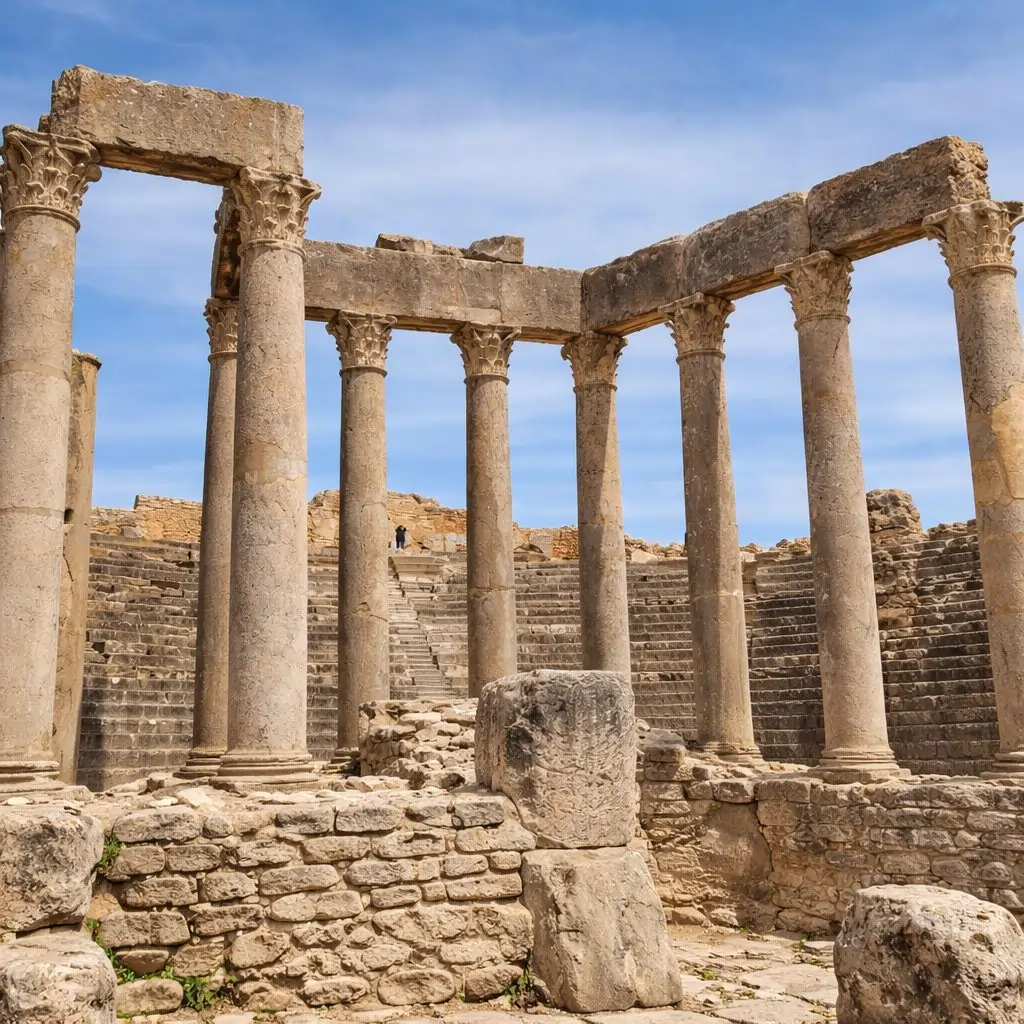
Dougga is a full city. Not a single monument.It stands on a hill. Silence surrounds it. No crowds. That changes everything.
The Temple of Jupiter dominates the site. Jupiter was the supreme god. He represented order, control, and power. The temple stands at the highest point. That was intentional.
Dougga Roman city – how life worked.The theatre still stands. The forum remains clear. Streets follow logic. Everything fits.
You do not just see ruins. You see life. As a result, Roman ruins in Tunisia feel more complete in Dougga than in many other sites.
We organize private tours to these locations.Contact us if you want to plan your visit.
Roman Ruins in Tunisia – El Djem, Africa’s Colosseum
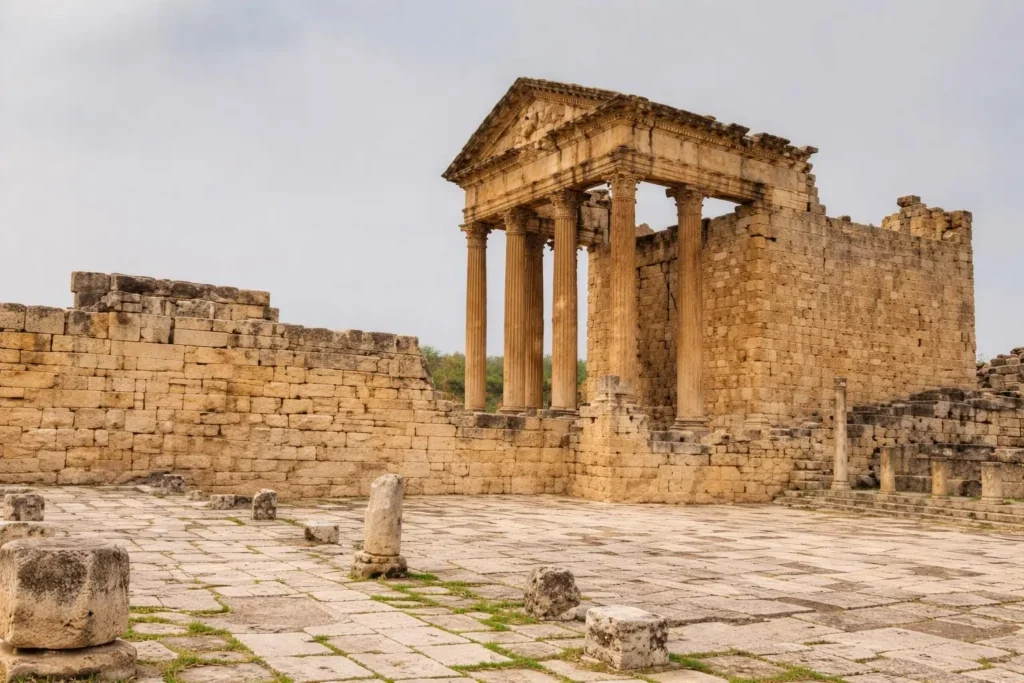
El Djem delivers immediate impact. It is the third largest amphitheatre in the world. Massive. Heavy. Real. However, the key difference is access.
You can access the arena and underground corridors, something that is restricted in most Roman sites in Europe. As a result, the experience feels more direct and immersive.
Romans created spectacle here. Gladiators and animals. They believed these games were under the protection of Mars, the god of war.That is why the place still feels alive.
Roman Ruins in Tunisia – Carthage, Where Empires Collided
Carthage carries weight.
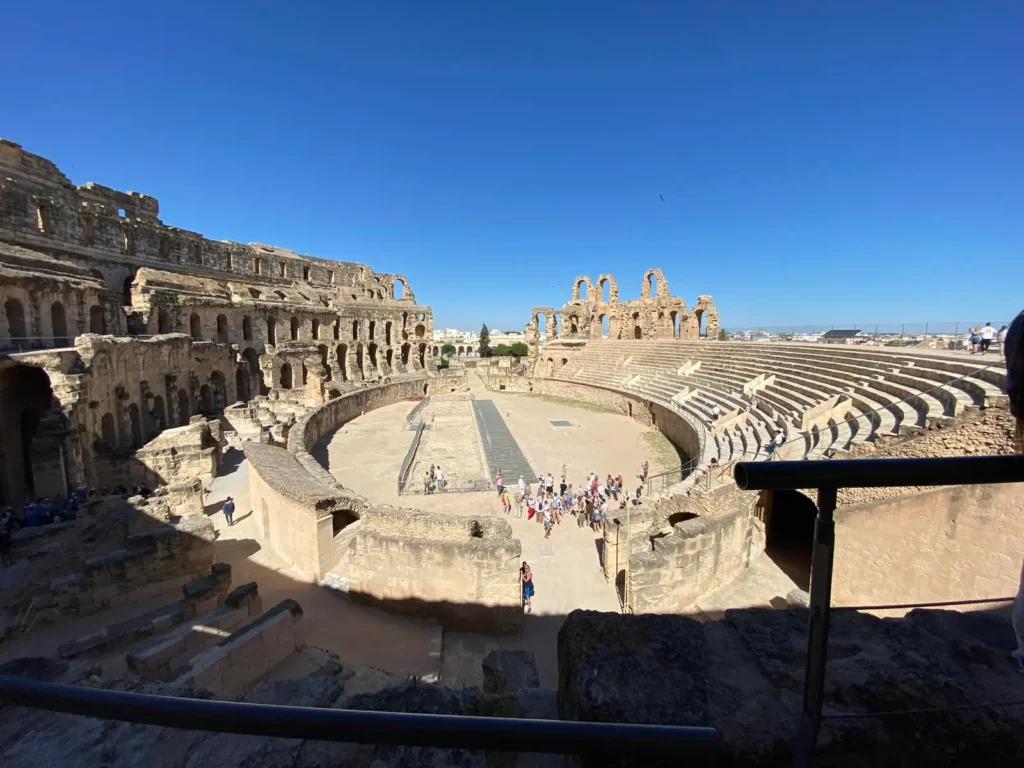
Before Rome, it was a powerful empire, built by Princess Dido. It fought Rome to the last drop of strength. However, in 146 BC, Rome destroyed it.
Then Rome rebuilt it.Today, you see layers. Not just ruins, but transformation.
The Antonine Baths show power.
However, the real value is the story. Destruction. Rebirth. One empire falling, another rising.Carthage is not just Roman. It is where history turned.
Roman Ruins in Tunisia – Sbeitla, the Forgotten City
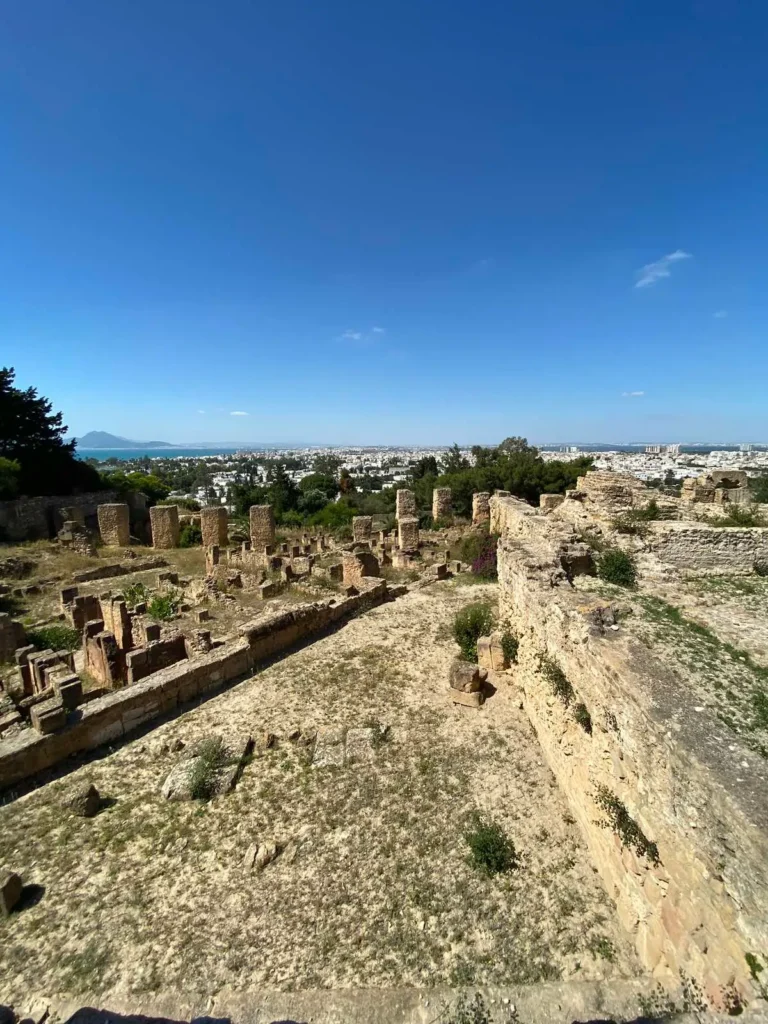
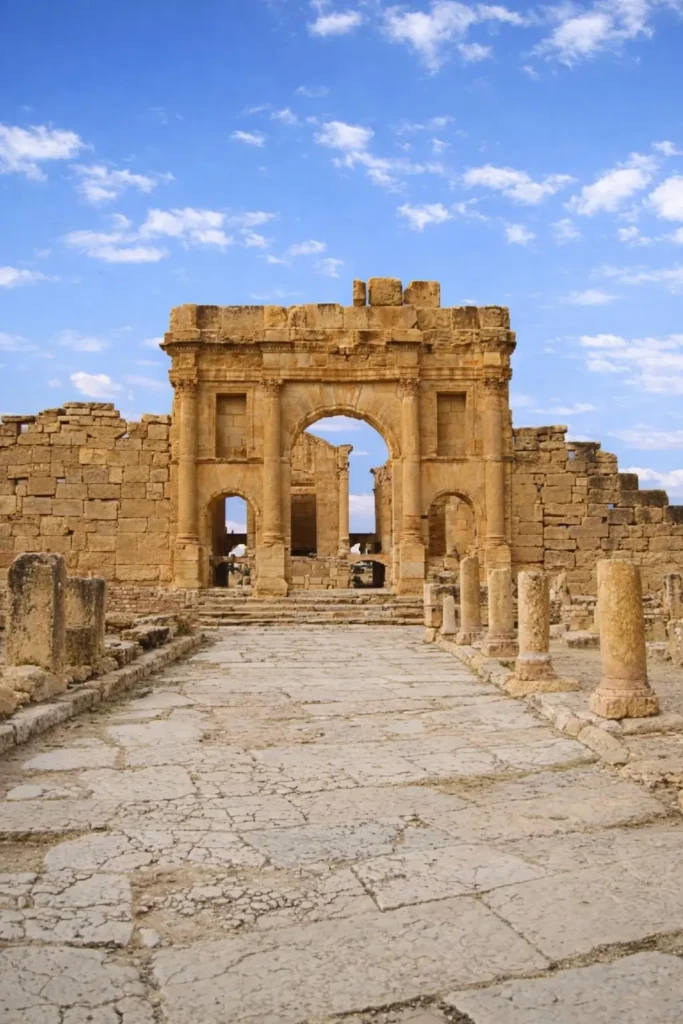
Three temples stand together: Jupiter, Juno, and Minerva. The Capitoline Triad.
However, unlike most Roman cities, these are three separate temples. One for each god. This is rare in the Roman world.
Sbeitla, known as Sufetula, was an important Roman settlement. The forum, triumphal arch, and city layout are still clearly visible.
The site also includes early Christian basilicas and stone baptism pools, showing the transition from Roman paganism to Christianity.That is why Sbeitla stands out among Roman ruins in Tunisia.
Roman Ruins in Tunisia – Zaghouan, The Source of Roman Power
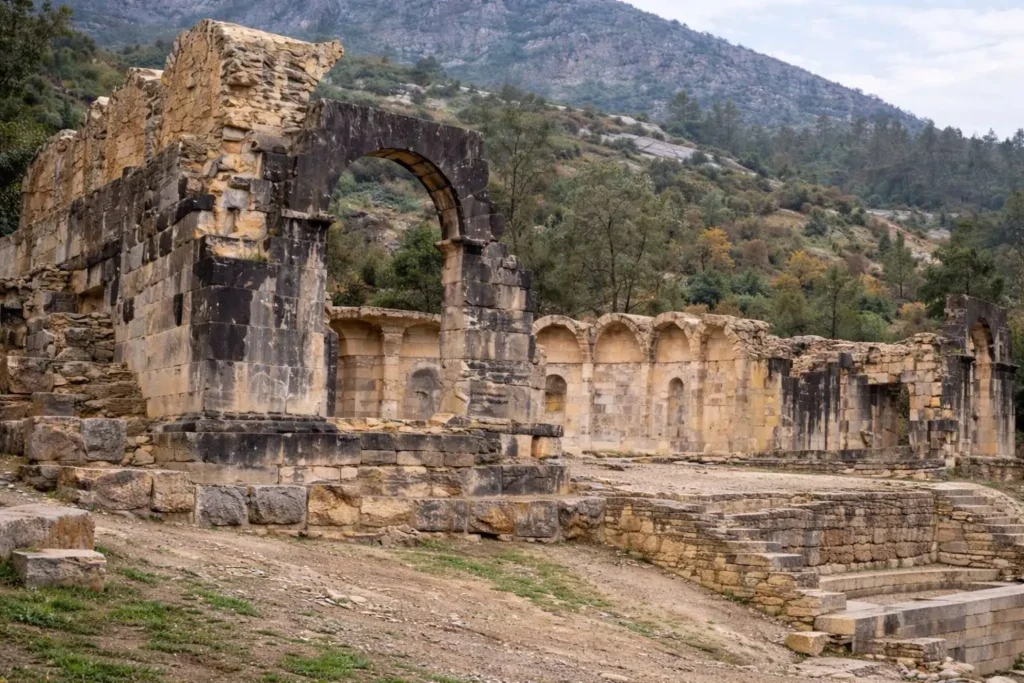
This is where the aqueduct began. Over 130 kilometers long. It carried water to Carthage.Romans built the Temple of Water (Nymphaeum) at the source. It was dedicated to water nymphs.
Zaghouan was part of Africa Proconsularis, one of the richest Roman provinces.The aqueduct system supplied Carthage, one of the largest cities of the Empire.Without water, there is no city.
Rome understood that.
Can You Visit Roman Ruins in Tunisia in One Trip?
Not in one day. However, you can combine the main Roman ruins in Tunisia into a smart route.
Private tours make the difference. You control the pace. No rush. No groups.
Contact us directly.
Why Roman Ruins in Tunisia Feel Different from Europe
In Europe, you observe. In Tunisia, you enter.Fewer people. More space.
However, the key difference is freedom. In Europe, access is limited. You follow paths. You stay behind barriers.
In Tunisia, you move through the ruins. You enter spaces. You get closer. As a result, Roman ruins in Tunisia feel more real and immersive.
FAQ – Roman Ruins in Tunisia
Which site is the best?
El Djem for impact. Dougga for depth.
Can I visit from Sousse,Hammamet or Monastir?
Yes. Everything can be organized.
Are these sites crowded?
No. Often, you have space for yourself.