
History of El Djem Amphitheatre
El Djem Amphitheatre is one of the most impressive Roman landmarks in Tunisia and one of the largest amphitheaters ever built in the Roman Empire. Located in the historic city of El Djem, formerly known as Thysdrus, this UNESCO World Heritage Site attracts travelers interested in ancient history, architecture, and authentic Tunisia experiences.
Built during the 3rd century AD, the amphitheater reflected the wealth and power of the Roman city, which became prosperous through olive oil trade and connections with important Mediterranean routes. Even today, El Djem Amphitheatre remains one of the best preserved Roman monuments in North Africa and is often compared to the Colosseum in Rome.
Thanks to the vast olive groves surrounding the region, Thysdrus became a powerhouse of olive oil production. Trade routes connected the city with major Mediterranean ports, bringing prosperity and influence. As a result, Roman authorities decided to build a monument that would display the wealth and importance of the city.
Therefore, construction began around 230 AD, creating what would become one of the greatest Roman monuments ever built in North Africa.
Planning a trip to Tunisia?We organize private tours across the country — contact us directly on WhatsApp
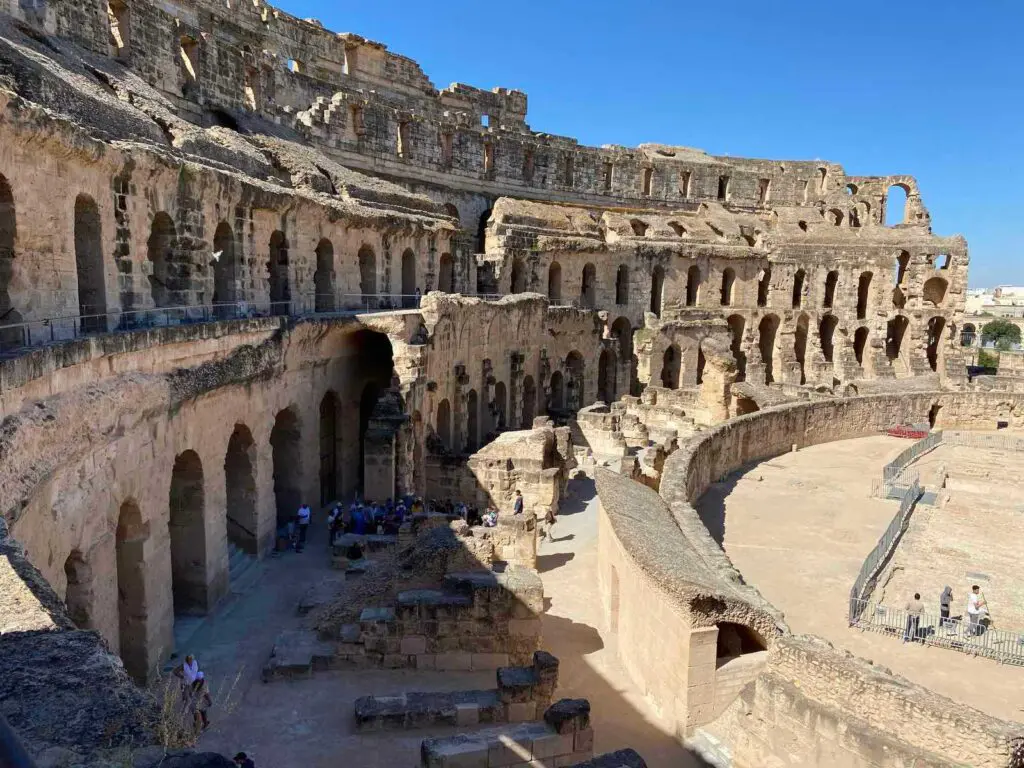
Construction and Architectural Marvel
The El Djem Amphitheatre quickly became a symbol of Roman power in the region. With a capacity of around 35,000 spectators, it ranks as the third largest Roman amphitheatre in the world, after the Colosseum in Rome and the amphitheatre of Capua.
Even today, that capacity rivals many modern stadiums.
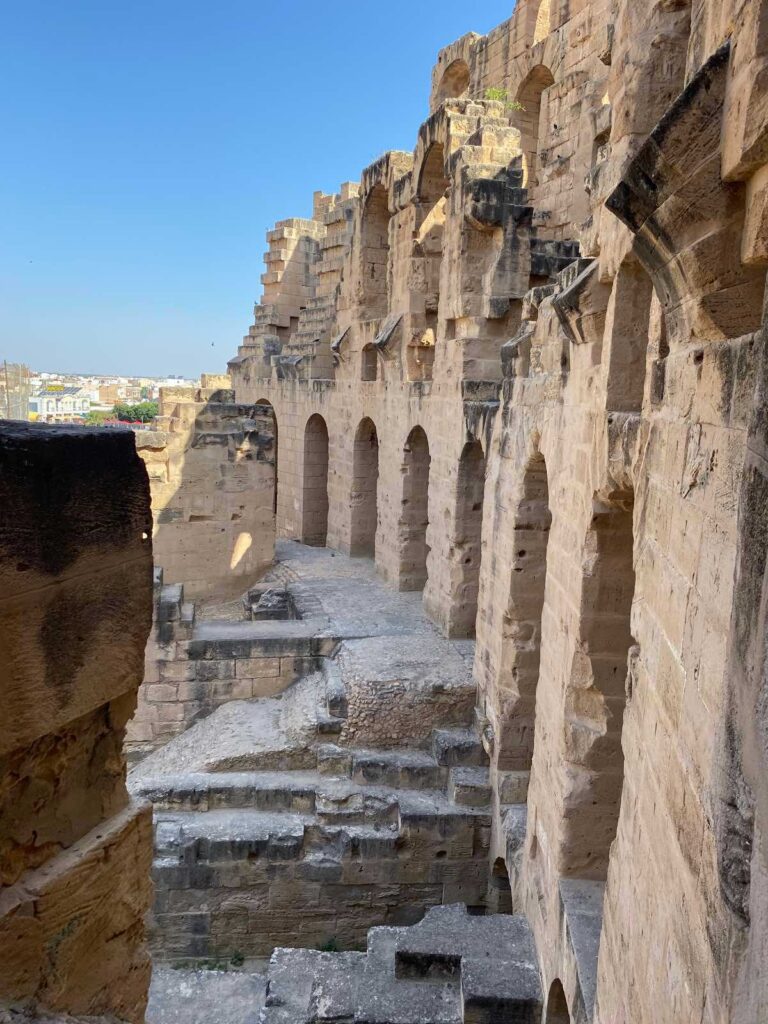
Because of its massive size and remarkably well-preserved structure, historians often compare it to the Colosseum in Rome. However, visiting El Djem offers a completely different experience. Unlike many other Roman arenas, visitors here can explore large sections of the monument freely.
Today the amphitheatre stands as one of the best-preserved Roman ruins outside Italy, attracting travelers and historians from around the world.
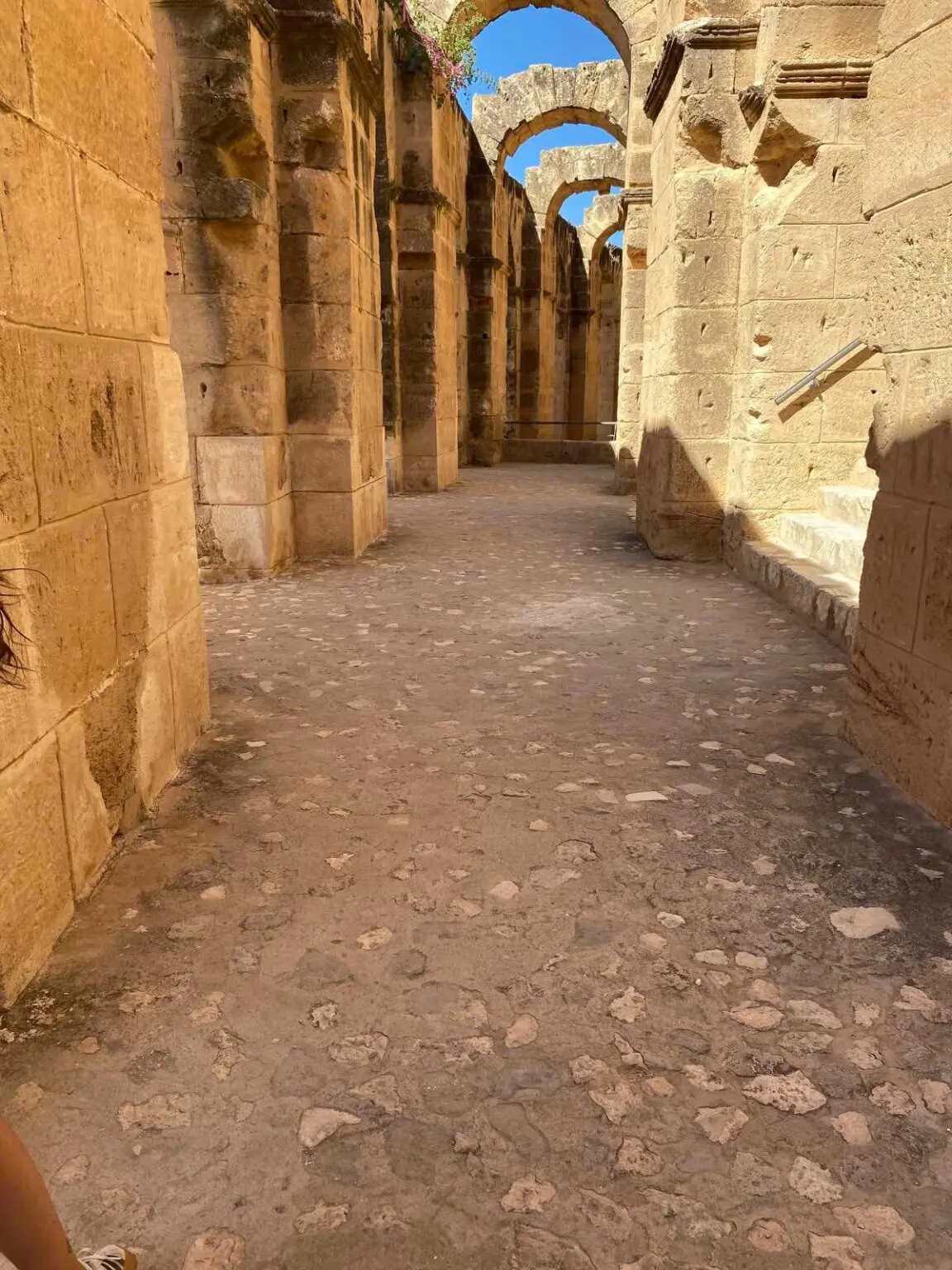
Step Into the Arena: Gladiators and Underground Secrets
During the Roman era the amphitheatre served as the center of public entertainment. Crowds gathered from across the region to witness dramatic spectacles.
Gladiator battles took place in the arena, where fighters entered through massive gates while thousands of spectators watched from the stone seating tiers above. However, most of the preparation happened underground.
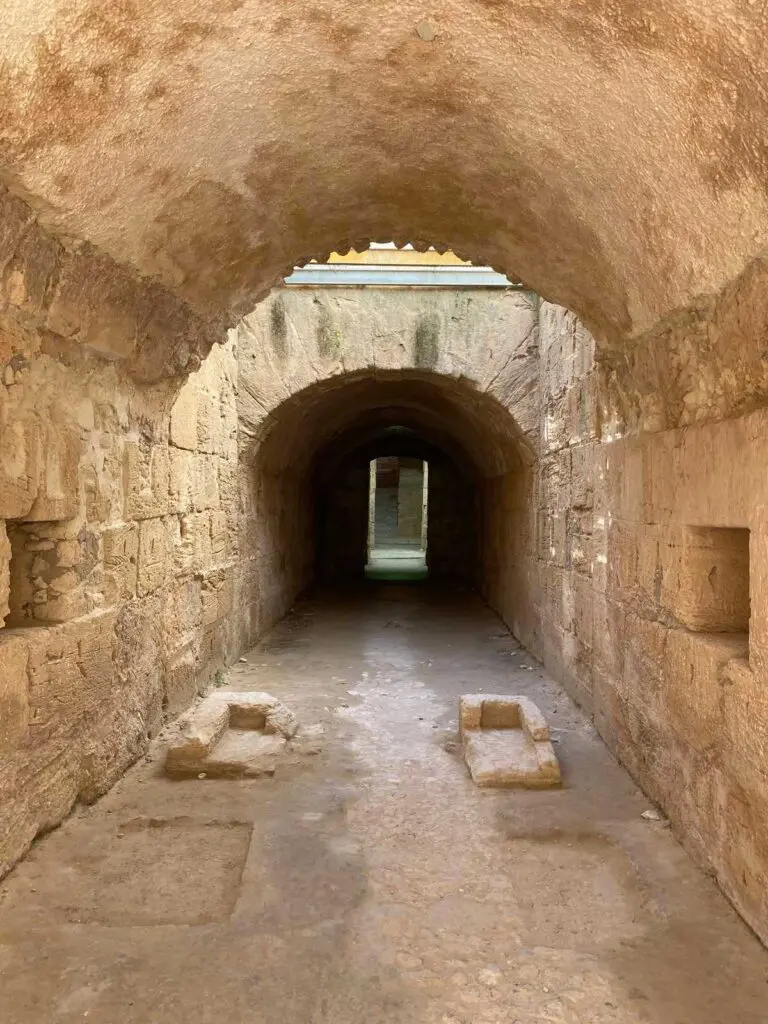
Beneath the arena lies a network of tunnels, corridors, and hidden chambers. Over there gladiators waited before entering the arena. Workers also kept wild animals in cages below the arena floor.
Today visitors can walk through these underground passages. This rare access allows travelers to experience the amphitheatre from the inside, almost exactly as it functioned during Roman times.
Many travelers say that walking through the tunnels beneath the arena is the most impressive part of the visit.
Planning a trip to Tunisia?We organize private tours across the country — contact us directly on WhatsApp:
Exploring the El Djem Amphitheatre Today
Unlike the Colosseum in Rome, the El Djem Amphitheatre allows visitors to explore a large portion of the structure.
Travelers can walk through ancient corridors, climb the massive seating tiers, and stand directly in the center of the arena. From the upper levels the view stretches across the surrounding Tunisian plains.
Standing inside the arena creates a powerful moment. Over there, where gladiators once fought, visitors can almost imagine the roar of the ancient crowd.
Because of this immersive experience, El Djem has become one of the most visited historical sites in Tunisia.
We organize private tours with a driver-guide and flexible itinerary.You move at your own pace and experience Tunisia in a more personal way.
El Djem Museum and Roman Mosaics
Just a short distance from the amphitheatre stands the El Djem Archaeological Museum. Many travelers combine both sites during the same visit.
The museum houses a world-class Roman mosaic collection discovered during excavations of ancient villas in Thysdrus. These mosaics reveal scenes of mythology, hunting, and everyday Roman life.
Therefore the museum provides a deeper cultural context to the monumental structure you have just explored.
UNESCO World Heritage Site
Because of its historical and architectural importance, the El Djem Amphitheatre was added to the UNESCO World Heritage List in 1979.
This recognition confirms the monument as one of the most important Roman archaeological sites in North Africa. Today thousands of travelers visit the amphitheatre every year.
For many visitors, it becomes one of the highlights of their trip to Tunisia.
Quick Tip for Travelers
If you are staying in Sousse, Monastir, or Hammamet, visiting El Djem is one of the most popular day trips in the region. Many travelers choose organized excursions because they combine comfortable transport, historical explanations from a professional guide, and visits to other important sites such as Kairouan or the El Djem Archaeological Museum.
You do not come to Tunisia every year.So it makes sense to choose something you will actually remember.
Book Your El Djem Amphitheatre Excursion
Reading about history is fascinating. However, walking through it creates a completely different experience.
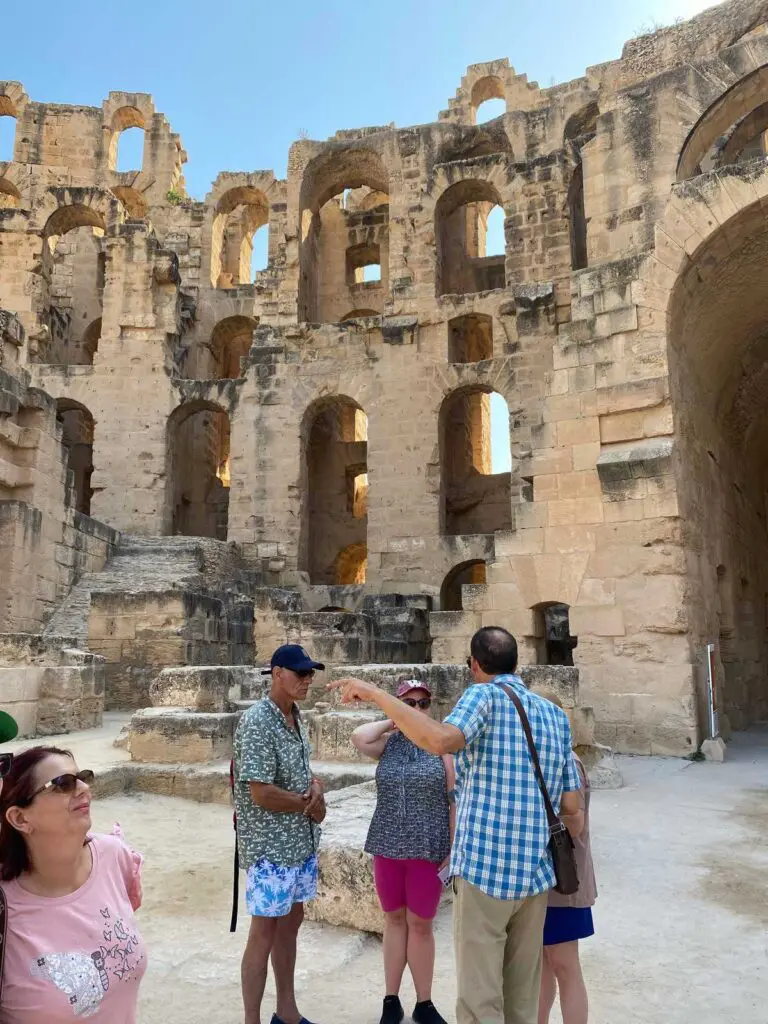
Our organized El Djem excursion allows travelers to explore the amphitheatre with an experienced guide. During the tour you will walk through underground tunnels, stand inside the ancient arena, and discover the hidden stories of Roman Tunisia.
Don’t just read about the past—experience it yourself.
Book your El Djem excursion today and visit one of the most impressive Roman monuments in the Mediterranean.
Planning your trip soon?Save our contact — we’ll help you organize everything once you arrive.
FAQ – Visiting El Djem Amphitheatre
Is El Djem Amphitheatre worth visiting?
Yes. The amphitheatre is one of the best-preserved Roman monuments in the world and one of the most impressive historical sites in Tunisia.
Is El Djem a UNESCO World Heritage Site?
Yes. The El Djem Amphitheatre has been part of the UNESCO World Heritage List since 1979 because of its exceptional historical value.
How much time do you need to visit El Djem?
Most visitors spend 1- 2 hours exploring the amphitheatre and the nearby archaeological museum.